Post
Classic Bronze Ink Dip Pen
Jun
Classic Bronze Ink Dip Pen: Timeless Character in a Modern Tool
Bronze — an alloy of copper and tin — is one of humanity’s oldest and most historically significant metalworking achievements, used for millennia to create everything from weapons and tools to art and ceremonial objects. The Classic Bronze Ink Dip Pen brings this ancient material into the service of calligraphy, creating a writing instrument with the warmth, weight, and character of history in the hand.
Bronze Construction and Aesthetics
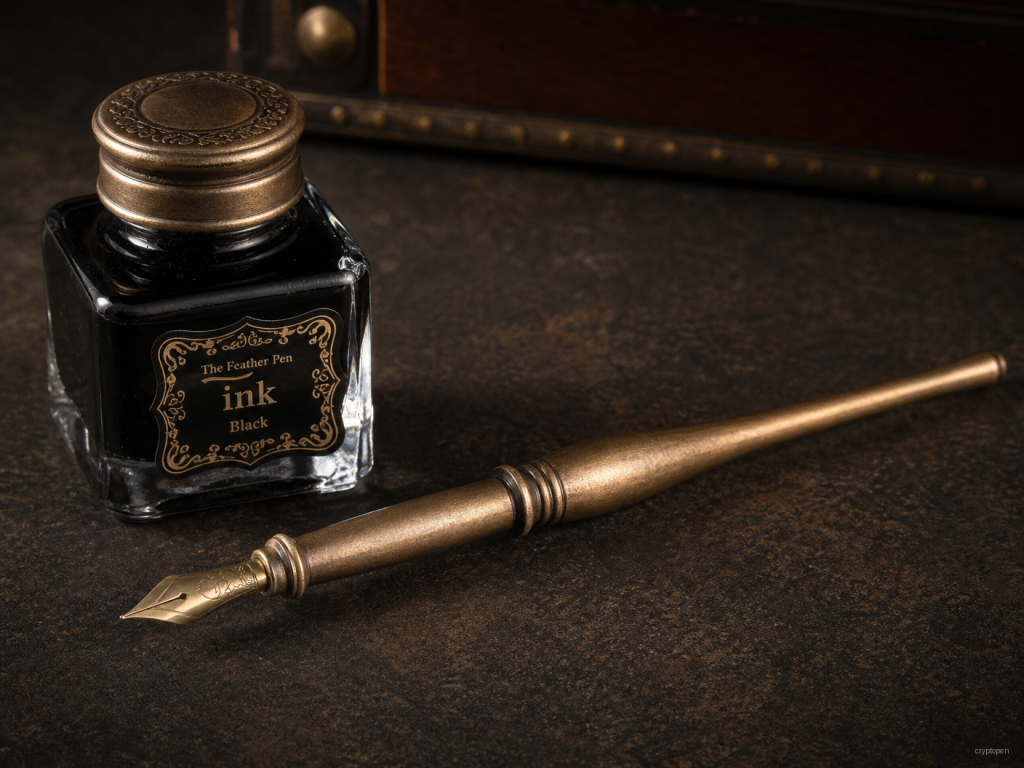
The Classic Bronze Ink Dip Pen’s barrel is cast from solid bronze using a sand casting process that has been used for thousands of years. Unlike modern industrial casting methods that produce perfectly smooth, uniform surfaces, sand casting leaves a characteristic texture that is part of the pen’s appeal — a slightly granular, organic quality that is unique to this manufacturing process and that gives the pen a genuinely handmade character.
After casting, each barrel is hand-finished by a metalsmith who removes casting lines, refines the form, and applies a protective patina treatment that stabilizes the natural oxidation process. This controlled patina gives the pen its rich, warm brown-gold color while preventing the ongoing darkening that would occur with unprotected bronze. The result is a surface that looks as if it has been aged for decades — because in a sense, it has been treated to compress that aging process into a controlled artistic result.
Weight and Balance
Bronze is significantly denser than the resin, acrylic, and even many of the wood materials used in competing pen barrels. This density gives the Classic Bronze Ink Dip Pen a substantial, purposeful weight that many calligraphers find facilitates better control, particularly on downstrokes. The pen’s mass seems to pull the nib through strokes with a satisfying inertia, reducing the need for active pressure from the writer’s fingers.
The balance point has been carefully considered in the pen’s design. The barrel tapers slightly toward the nib end, shifting some mass toward the center-to-rear of the pen, which prevents it from feeling front-heavy despite the density of the material. The result is a pen that sits naturally in the hand at the correct writing angle with minimal effort from the writer.
Nib System
The Classic Bronze Ink Dip Pen accepts all standard dip pen nibs through a precision-machined brass insert that is securely fitted into the bronze barrel. The insert features multiple size channels that accommodate both the wide range of flexible pointed nibs used in Western calligraphy and the broader, stiffer nibs favored for italic and broad-edge work.
The pen is particularly well-suited to the larger, more substantial nibs that benefit from the support of a weighty barrel. Hiro 41 and Brause 361 nibs — both substantial, moderately flexible pointed nibs favored for intermediate and advanced Copperplate work — feel especially at home in the Classic Bronze, their mass complementing the pen’s gravity and stability.
Ink Compatibility and Use
As a dip pen, the Classic Bronze Ink offers complete ink freedom. The traditional ink of choice for bronze pen aesthetics is iron gall ink, whose dark reddish-brown tone complements the pen’s patinated surface beautifully. The combination of bronze barrel, iron gall ink, and cream-colored parchment paper creates a writing experience that feels genuinely historical — like producing a medieval manuscript or Renaissance-era document.
Modern calligraphers will also appreciate the pen’s compatibility with metallic inks, gouache, and specialty inks that simply cannot be used in fountain pens. Metallic gold ink in a Classic Bronze pen on dark paper creates work of spectacular visual impact — the ink’s shimmer complementing the pen’s warm metallic glow.
Historical Resonance
Using a bronze writing instrument creates a tangible connection to the earliest days of written language. Bronze age civilizations were the first to develop systematic writing, using bronze tools to inscribe clay tablets, stone surfaces, and precious metals. While the Classic Bronze Ink Dip Pen belongs firmly in the contemporary calligraphy world, holding it invokes the long chain of human ingenuity and artistic endeavor that stretches back to those earliest scribes.
Developing Patina
One of the most compelling qualities of the Classic Bronze Ink Dip Pen is its evolution over time. The initial patina treatment provides a stable base, but continued use and handling gradually deepen and personalize the surface character. The oils from the writer’s hand interact with the bronze, highlighting the high points in the casting texture and darkening the recesses, creating a three-dimensional patina that is unique to each pen and its owner.
After years of use, a Classic Bronze pen develops what collectors of antique objects call “honest wear” — the kind of surface character that can only be produced by genuine use over time, and that is worth far more aesthetically than the appearance of artificial aging. The pen, in a sense, records its own history through its surface.
Care and Maintenance
The bronze barrel requires minimal maintenance — occasional wiping with a dry cloth to remove fingerprints, and periodic application of a thin coat of Renaissance wax to protect and enhance the patina. Nibs should be cleaned after each use to prevent ink from drying in the tines, which can permanently alter their flexibility. Store the pen in the provided leather pouch to protect its surface from accidental impact.
Conclusion
The Classic Bronze Ink Dip Pen is for the calligrapher who values depth of character over surface perfection — who finds beauty in aged surfaces, historical resonance in material choices, and meaning in the connection between ancient craft traditions and contemporary creative practice. This is a pen that will grow more beautiful and personal with every year of use, becoming ultimately a singular object that carries its history in its very substance.
A Final Word on Character
The Classic Bronze Ink Dip Pen is ultimately a pen about character — the character of the material, the character of the craft that made it, and the character that develops between the pen and its owner over years of use. In a world where most writing instruments are designed to be identical and replaceable, the Classic Bronze stands apart through its absolute commitment to individuality and the long-term relationship between a pen and its user. Buy this pen, use it, care for it, and watch it become something that could only be yours. That transformation, from purchased object to personal artifact, is the greatest value any writing instrument can offer.
